
I’ve walked a lot of acreage properties with buyers over the years, and I’ve noticed something. Almost everyone falls in love the same way. They pull down the driveway, see the trees and the pond and the space, and they’re mentally moving in before we ever reach the front porch.
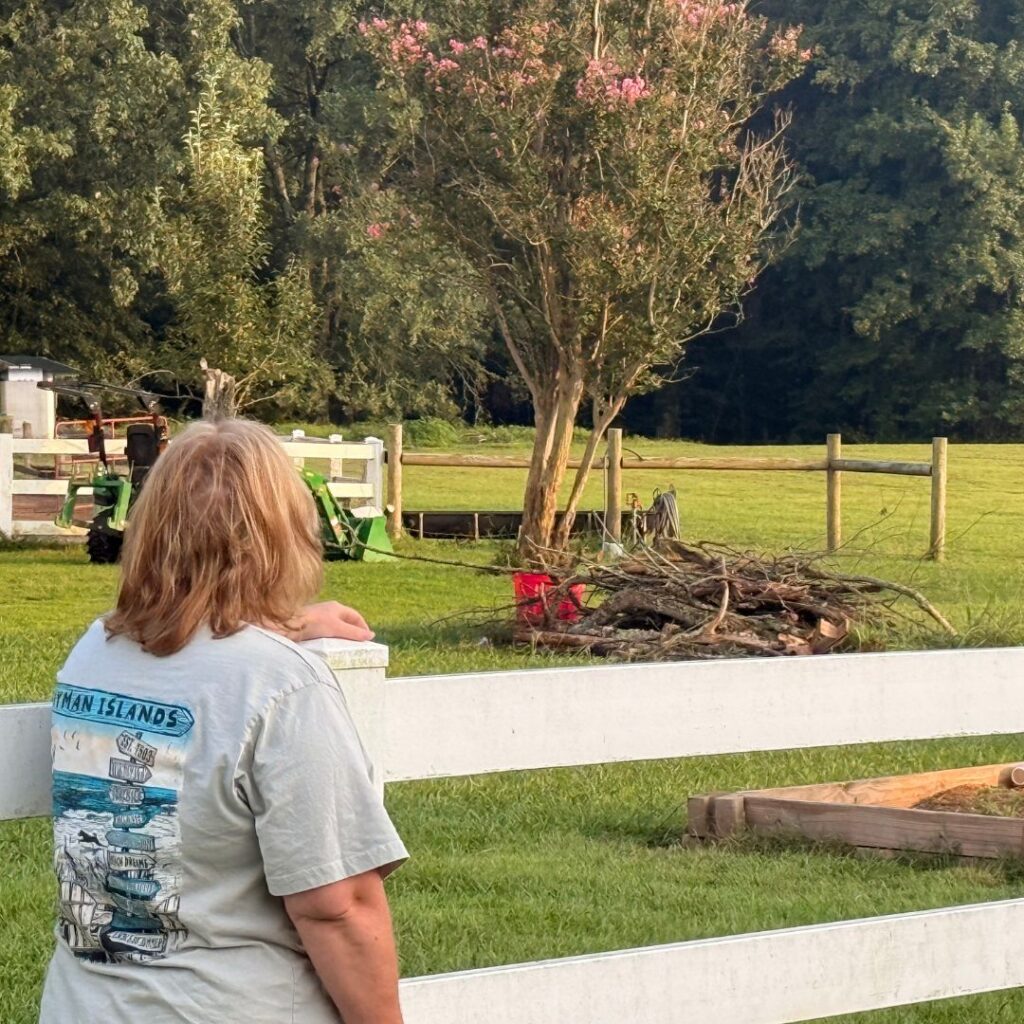
I get it. I live on acreage in Fayette County myself, with a lake, animals, and fencing I’m always fixing somewhere. The lifestyle is real and it’s worth it. But the properties that make people happiest ten years later are the ones where somebody slowed down and looked past the pretty view before writing the offer.
Here are the five things I check with my buyers that most people miss.
1. How the land drains after a hard rain
A property can look perfect on a sunny Saturday and tell a completely different story after two inches of rain. Low spots that hold water for days limit where you can put animals, gardens, outbuildings, or a future shop. Standing water near the house or septic area is an even bigger conversation.
When I walk land with buyers, I’m looking for the clues: erosion channels, water-stained fence posts, cattails and water-loving plants growing in odd places, and how the ground feels underfoot in the lower sections. If we can, I like to see a property after rain, because the land will tell you the truth when it’s wet.
2. Where the septic system sits, and whether it has room to breathe
Most acreage homes in Fayette County are on septic, and a septic system is one of the most expensive components on the property. Buyers usually remember to ask if it works. Fewer ask where the tank and drain field actually are, when the tank was last pumped, and whether there’s suitable ground for a replacement field if this one ever fails.
That last question matters more than people realize. Soil conditions decide where a drain field can go, and not every acre of a property qualifies. Knowing your options before you buy beats finding out when there’s a problem.
3. How much of the acreage you can actually use
Twenty acres on paper is not always twenty acres in real life. Wooded ground, steep sections, wet areas, and easements all subtract from what you can graze, mow, build on, or fence. I’ve seen listings where the usable portion was less than half the total acreage.
That’s fine if you wanted woods and privacy. It’s a problem if you were picturing horses on pasture. So before we talk price, I ask buyers what they actually plan to do with the land, and then we walk it and figure out honestly whether this piece of ground can do that job.
4. The fencing, and what it will cost you
Fencing looks like a detail until you get a quote. Materials and labor for good fence add up fast, and a property with a lot of road frontage or old, failing fence can carry tens of thousands of dollars in future costs that never show up in the listing.
As someone who maintains her own fence lines, I look at the type of fencing, the condition of posts and corners, and whether it matches what the buyer needs. Fence built for cattle doesn’t automatically work for horses, goats, or dogs. Sometimes the honest answer is that the fence is a bonus. Sometimes it’s a demolition project.
5. Road access and how the property lays out
Year-round access sounds boring right up until it isn’t. How does the driveway hold up in wet weather? Is any part of the access shared or covered by an easement? How far is the house from where the animals, shop, or barn would go, and does that layout work in February when it’s dark at five o’clock and you’re carrying feed?
Layout is the thing you live with every single day. A beautiful property with a layout that fights you gets old fast. A modest property that lays out right just quietly works.
The house can be perfect and the land can still cost you
None of this is meant to scare anyone away from acreage. It’s the opposite. I want more people to have the lifestyle, which is exactly why I’d rather walk the property with you and talk through all of it before you make an offer, while everything is still negotiable.
If you’re looking at acreage anywhere in West Tennessee, whether that’s Fayette County, Rossville, Oakland, Somerville, or Moscow, reach out. I’ll look at the land the way an owner does, because I am one.
Kari Witt is a REALTOR and licensed Mortgage Loan Originator (NMLS #2265501) serving West Tennessee and the Greater Omaha area. Backyards to Barns, We’ve Got You Covered.