“Can I use a USDA loan on land?”
I hear that question almost every week from buyers looking at homes out here in Fayette County. It makes sense. USDA is the zero-down loan built for rural areas, and Fayette County is full of homes sitting on a few acres.
The honest answer is yes, often you can. But there are a few rules that trip people up, and most of them have nothing to do with how many acres the property has.
I’m in a slightly unusual spot to talk about this. I’m a REALTOR and a licensed mortgage loan officer, so I see these deals from both sides: the house you fall in love with, and the underwriting that decides whether the loan actually closes. Here’s what I want every buyer to know before they start touring acreage with a USDA loan in mind.
First, What Is a USDA Loan?
When most people say “USDA loan,” they mean the USDA Single Family Housing Guaranteed Loan. You apply through an approved mortgage lender, and USDA Rural Development guarantees part of the loan. That guarantee is what lets lenders offer 100% financing.
A few basics:
- No down payment required
- 30-year fixed rate
- The home has to be your primary residence
- There’s an upfront guarantee fee and a small annual fee (more on that below)
There’s also a separate USDA Direct loan program for lower-income households that works through USDA itself. This post is about the Guaranteed program, since that’s the one most buyers use.
To get a Guaranteed loan, you have to pass three tests: location, income, and property. Let’s take them one at a time.
Test #1: Is the Address in a USDA-Eligible Area?
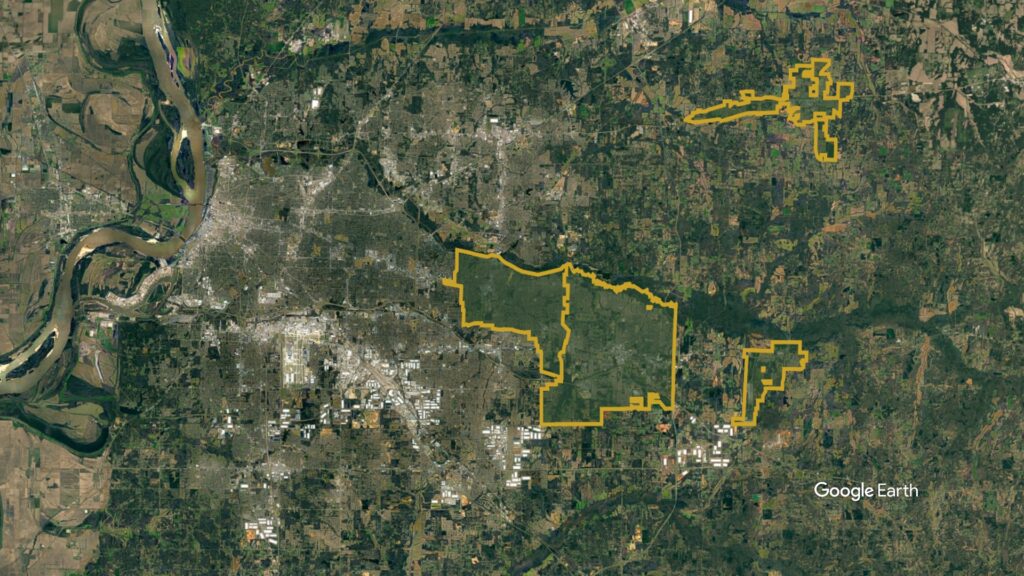
USDA only guarantees loans on homes in areas it considers rural. A lot of Fayette County falls inside those boundaries, which is part of why USDA comes up so often around here.
But please don’t assume. Eligibility is decided address by address, and the map gets reviewed and updated over time. A property a few miles from the next one can land on a different side of the line, especially as you get closer to Shelby County and the faster-growing towns.
You can check any address yourself on USDA’s eligibility site at eligibility.sc.egov.usda.gov. I check it before I ever send a USDA buyer to see a house. It takes thirty seconds and saves a lot of heartbreak.
Test #2: Does Your Household Income Fit Under the Limit?
This is the one that catches people off guard.
USDA doesn’t cap the loan amount. It caps household income. And it counts the income of the adults living in the home, even if they aren’t on the loan.
So if you’re buying with your spouse but your adult son lives with you and works full-time, his income gets looked at for eligibility, even though he isn’t borrowing.
The current limits took effect July 13, 2026. For most Tennessee counties, the standard limit is:
- $122,800 for a household of 1 to 4 people
- $162,100 for a household of 5 to 8 people
Confirm the exact number for your county and household size on the same USDA eligibility site, because some areas run higher than the standard.
The good news: USDA uses adjusted income, which allows certain deductions, such as an amount for each dependent child and some childcare costs. A household that looks a little over the limit at first glance can sometimes qualify once those are applied. This is worth running with a loan officer before you give up on it.
Test #3: Does the Property Qualify? (This Is Where Acreage Comes In)
Here’s the part most buyers get wrong in both directions.
There’s no set acreage limit
USDA’s handbook doesn’t put a maximum on lot size. A 7-acre property can absolutely work. So can 15 acres.
What matters is whether the site is typical for the area. The appraiser compares your property to similar homes nearby. If most homes on that road sit on 8 to 12 acres, a 10-acre property fits right in. If you find a 60-acre tract where everything around it is on 2 acres, that’s a much harder conversation.
The land can’t be used principally to make money
This is the real dealbreaker. USDA is a home loan, not a farm loan. Vacant land doesn’t qualify, and properties used mainly for farming or a business don’t either.
In real life, here’s how that tends to play out:
- Usually fine: a big garden, a few chickens, a couple of horses for your family, a pond you fish in on Saturdays
- Usually a problem: a working cattle or hay operation, a boarding barn, an orchard selling to the public, land that’s currently leased out for crops as its main purpose
The final call belongs to the underwriter and appraiser, so if a property has any agricultural use, tell your loan officer up front. It’s much easier to address before the appraisal than after.
Barns and shops are okay
Outbuildings like barns, shops, and sheds are allowed as long as they aren’t principally used to produce income. Just know the appraiser may not give them much value, so a big shop won’t always raise the appraised price the way you’d hope.
The home itself has to be in good shape
The house has to be safe, sound, and residential in character. A heavy fixer-upper with a failing roof or no working heat is going to struggle. On rural properties, water testing on a private well and the condition of the septic system also come into play. If you’re new to well and septic homes, I wrote a whole guide on that: Buying a Home on Well and Septic: A First-Timer’s Guide.
Something New Coming in December: Rental ADUs
Up until now, a property with a guest house or apartment that brings in rent has been a problem for USDA financing.
That’s changing. USDA published a final rule on October 29, 2026 allowing Guaranteed loans on properties that include an income-producing accessory dwelling unit (ADU). It takes effect December 28, 2026.
For rural buyers, this matters. Plenty of acreage properties out here have a mother-in-law suite or a small second home on the land. Lenders will need time to roll out their guidelines, so the details will take a little while to settle, but it opens a door that’s been closed.
Zero Down Doesn’t Mean Zero Cash
I always want buyers to hear this early. USDA can cover your down payment, but you’ll still have some costs.
- Upfront guarantee fee: currently 1% of the loan, and it can usually be rolled into the loan
- Annual fee: currently 0.35%, paid monthly with your mortgage payment
- Closing costs like title, recording, and lender fees
- Earnest money, inspections, and the appraisal, which usually come out of pocket before closing
To put that in numbers: on a $300,000 loan, the upfront fee would be $3,000, and the annual fee works out to roughly $87.50 a month in the first year. USDA sets these fees each fiscal year, so confirm the current rates when you apply.
Seller concessions can help cover some closing costs, and that’s something we can negotiate in your offer. If you want a full breakdown of what buying actually costs around here, read How Much Cash Do You Actually Need to Buy a Home in West Tennessee?
What About Credit and Debt?
Most USDA loans run through USDA’s automated underwriting system. The guideline debt ratios are 29% of your income for the housing payment and 41% for all your monthly debts combined, though strong files can sometimes go higher.
Credit requirements vary by lender. Many look for a score of 640 or higher for an automated approval, and some will consider lower scores with a manual review. Your full picture matters more than one number.
When USDA Isn’t the Right Fit
USDA is a great loan, but I’d steer you elsewhere if:
- You plan to run a farm, boarding, or other business on the land
- Your household income is over the limit, even after deductions
- You’re buying vacant land to build on later
- The property is far larger than anything else around it
In those cases, a conventional loan, an FHA loan, or a lender that specializes in farm and land financing may work better. The right loan depends on the property and on you, and it’s worth comparing before you write an offer.
A Quick Checklist Before You Fall in Love With a Property
- Check the exact address on the USDA eligibility map.
- Add up the income of every adult who will live in the home.
- Ask how the land is being used today. Is any of it leased or farmed for income?
- Look at nearby properties. Is the lot size typical for the road?
- Ask about the well, the septic, and the condition of the home.
- Get pre-approved for USDA before you tour, so you know exactly where you stand.
Rural properties come with their own set of surprises. If you want more on that, read 5 Things Buyers Miss When Buying Acreage in Fayette County.
Let’s See If USDA Works for You
Because I’m both your REALTOR and a loan officer, I can tell you whether a property is likely to pass USDA before you spend money on inspections and an appraisal. That’s a big deal on acreage, where the land itself can make or break the loan.
If you’re thinking about buying a home with some land in Fayette County, call or text me at 402-578-5274, and we’ll look at your income, the area you like, and whether USDA makes sense for you.
Backyards to Barns | We’ve Got You Covered
Kari Witt, Mortgage Loan Originator, NMLS #2265501. Secure Choice Lending, NMLS #1689518. Kari Witt, REALTOR, eXp Realty, TN License #372114. Equal Housing Opportunity. This article is for general educational purposes and is not a commitment to lend or an offer of credit. Loan approval is subject to credit, income, property, and program eligibility requirements. USDA program limits, fees, and eligibility maps change periodically; verify current requirements before applying. Information current as of November 2026.